
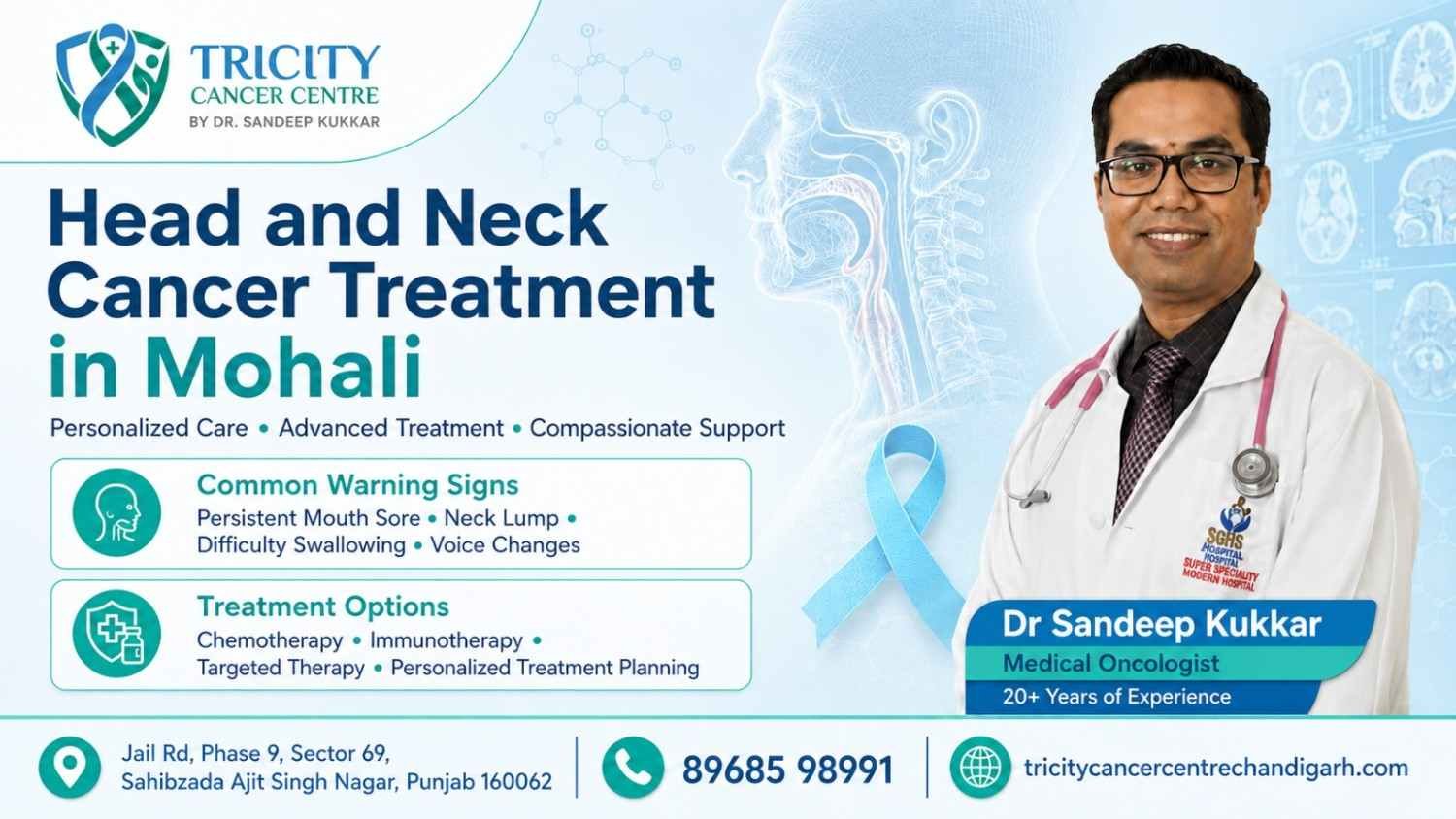
Head and neck cancer refers to a group of cancers that may develop in the mouth, throat, voice box, nasal cavity, sinuses or salivary glands. These areas support essential functions such as speaking, swallowing and breathing. Therefore, early medical evaluation and carefully planned Head and Neck Cancer Treatment in Mohali are important.
Symptoms of head and neck cancer can sometimes resemble common throat infections or other non-cancerous conditions. However, a persistent mouth ulcer, unexplained neck lump, difficulty swallowing or a long-lasting change in voice should not be ignored.
At Tricity Cancer Centre Chandigarh, Dr. Sandeep Kukkar provides personalized cancer care based on the cancer type, location, stage and the patient’s overall health.
What Is Head and Neck Cancer?
Head and neck cancers can begin in different tissues and organs. Many of these cancers develop in the squamous cells that line the moist surfaces inside the mouth, nose and throat.
Common types of head and neck cancer include:
- Oral cavity cancer affecting the tongue, gums, lips or inner cheeks
- Oropharyngeal cancer involving the tonsils or base of the tongue
- Nasopharyngeal cancer developing behind the nose
- Laryngeal cancer affecting the voice box
- Hypopharyngeal cancer affecting the lower throat
- Nasal cavity and paranasal sinus cancer
- Salivary gland cancer
- Cancer that has spread to the lymph nodes in the neck
Each type may have different symptoms and treatment requirements. Therefore, a complete examination and biopsy are necessary to confirm the diagnosis.
Common Symptoms of Head and Neck Cancer
Symptoms depend on where the cancer begins. Some signs may initially appear mild but become more noticeable over time.
Patients should seek medical advice if they experience:
- A mouth ulcer or sore that does not heal
- A lump or swelling in the neck, mouth or jaw
- Persistent throat pain
- Difficulty or pain while swallowing
- Unexplained hoarseness or voice changes
- White or red patches inside the mouth
- Unusual bleeding or numbness in the mouth
- Persistent pain in one ear
- Repeated nosebleeds
- Long-lasting nasal blockage
- Difficulty opening the mouth
- Loose teeth without an obvious reason
- Numbness or weakness in part of the face
- Unexplained weight loss
These symptoms do not always indicate cancer. Nevertheless, symptoms that persist, return or worsen should be evaluated by a qualified medical professional.
Major Risk Factors
Several factors may increase the possibility of developing head and neck cancer.
Tobacco use
Smoking cigarettes, bidis, cigars or pipes is an important risk factor. Smokeless tobacco products such as gutka, khaini and chewing tobacco can also increase the risk of oral cancer.
Alcohol consumption
Frequent or excessive alcohol consumption may increase the risk. The combination of tobacco and alcohol can further raise the likelihood of certain head and neck cancers.
Human papillomavirus
Some oropharyngeal cancers are associated with high-risk types of human papillomavirus, particularly HPV-16. HPV-related cancers commonly affect the tonsils or the base of the tongue.
Other contributing factors
Additionally, long-term sun exposure may increase the risk of lip cancer. Furthermore, poor nutrition, occupational exposure to certain substances, a weakened immune system and previous radiation exposure may also contribute in selected cases.
However, having a risk factor does not necessarily mean that a person will develop cancer. Similarly, some patients may develop the disease without any clearly identifiable risk factor.
Diagnosis Before Head and Neck Cancer Treatment in Mohali
A correct diagnosis helps the oncology team understand the cancer’s location, type and extent. The process generally begins with a discussion about the patient’s symptoms, medical history, tobacco or alcohol exposure and overall health.
Diagnostic evaluation may involve:
Physical examination
The doctor examines the mouth, throat, nose, face and neck for ulcers, abnormal patches, swelling or enlarged lymph nodes.
Endoscopy
A thin and flexible instrument with a light and camera may be used to examine areas inside the nose, throat or voice box that are difficult to see during a routine examination.
Imaging investigations
CT scans, MRI scans or PET-CT scans may help identify the tumour’s size and location. Imaging can also show whether the disease has reached nearby lymph nodes or other parts of the body.
Biopsy
During a biopsy, a small tissue sample is collected from the suspicious area. A pathologist examines the sample to determine whether cancer cells are present. A biopsy is usually required to confirm the diagnosis.
Biomarker testing
In selected cases, testing for HPV, PD-L1 or other biomarkers may provide information about the cancer and help guide certain treatment decisions.
Cancer staging
Staging shows how far the cancer has progressed. Doctors evaluate the primary tumour, nearby lymph nodes and possible distant spread. This information plays an important role in selecting treatment.
Treatment Options for Head and Neck Cancer
Treatment varies from one patient to another. The oncology team considers the cancer’s location, stage and biological characteristics, along with the patient’s general health and personal treatment goals.
Surgery
Surgery may be performed to remove the tumour and a small margin of nearby tissue. If the disease has reached lymph nodes in the neck, surgery may also be required to remove affected nodes. Reconstructive procedures may be considered after extensive surgery to restore appearance or function.
Radiation therapy
Radiation therapy uses high-energy beams to destroy cancer cells. It may be used as the primary treatment for certain cancers or recommended after surgery to reduce the risk of the disease returning.
Modern radiation techniques allow doctors to target the tumour more precisely while limiting unnecessary exposure to nearby healthy tissues.
Chemotherapy
Chemotherapy uses anti-cancer medicines that travel through the bloodstream. It may be administered with radiation for locally advanced cancer or used when the disease has returned or spread.
The drugs, schedule and duration depend on the cancer type, treatment objective and the patient’s health.
Targeted therapy
Targeted medicines act on specific proteins or pathways that support cancer growth. These therapies may be considered for selected patients with recurrent, advanced or metastatic disease.
Immunotherapy
Immunotherapy helps the immune system recognize and attack cancer cells. It may be suitable for certain recurrent or metastatic cancers after considering previous treatments, biomarker results and the patient’s overall condition.
Combined treatment
Some patients require more than one treatment. For example, surgery may be followed by radiation, while locally advanced cancers may require chemotherapy and radiation together. The treatment sequence depends on individual clinical findings.
Importance of Coordinated Cancer Care
Managing head and neck cancer requires careful planning because the disease and its treatment may affect speaking, swallowing, breathing, nutrition and appearance. A coordinated approach allows doctors to assess these concerns before treatment begins.
When planning Head and Neck Cancer Treatment in Mohali, the oncology team considers the biopsy report, tumour location, stage, imaging results and the patient’s general health. The expected impact of treatment on essential functions is also evaluated.
Dr. Sandeep Kukkar provides evidence-based medical oncology care at Tricity Cancer Centre Chandigarh. Patients searching for the Best Oncologist in Mohali should consider clinical experience, communication, personalized treatment planning and whether the available options are explained clearly.
Supportive Care During Treatment
Supportive care helps patients manage cancer symptoms and treatment-related side effects. The required support depends on the treatment used and the patient’s individual needs.
It may include:
- Nutritional guidance
- Management of pain and mouth sores
- Support for swallowing or speech difficulties
- Medicines for nausea and other side effects
- Tobacco cessation guidance
- Emotional and psychological support
- Rehabilitation after treatment
- Monitoring of treatment response
Patients should report new or worsening side effects promptly. They should not stop treatment, change medicines or use supplements without consulting their oncology team.
Recovery and Follow-Up
Follow-up appointments remain important after active treatment has ended. The oncology team may perform clinical examinations and recommend imaging or blood tests when required.
Patients should:
- Attend every scheduled follow-up appointment
- Avoid tobacco products
- Limit or avoid alcohol
- Follow the recommended nutrition plan
- Continue rehabilitation exercises when advised
- Report a new neck lump, swallowing problem or voice change
- Discuss any persistent or unusual symptom with the doctor
Regular monitoring helps doctors assess recovery, manage long-term side effects and identify signs of recurrence as early as possible.
Personalized Care at Tricity Cancer Centre Chandigarh
Effective Head and Neck Cancer Treatment in Mohali begins with an accurate diagnosis and a treatment plan tailored to the patient. At Tricity Cancer Centre Chandigarh, Dr. Sandeep Kukkar evaluates each case individually and explains suitable medical oncology options, expected benefits and possible side effects.
Patients and their families should ask questions and understand the purpose of every recommended test or treatment. Active participation can help them make informed decisions throughout the cancer-care journey.
Frequently Asked Questions
1. Is every neck lump a sign of cancer?
No. Neck lumps may occur because of infections or other non-cancerous conditions. However, a persistent, enlarging or unexplained lump requires medical evaluation.
2. Can head and neck cancer be treated without surgery?
Some cancers may be treated with radiation therapy, chemotherapy, immunotherapy or a combination of approaches. The appropriate option depends on the cancer’s location, stage and the patient’s overall health.
3. How is the treatment plan selected?
The plan is based on the biopsy findings, tumour location, cancer stage, imaging results, relevant biomarkers and general health. Doctors also consider how the treatment may affect speaking, swallowing and other essential functions.
