
What Is Oral Cancer?
Oral cancer refers to the development of abnormal cells in the tissues of the mouth. It can affect different areas, including the lips, tongue, gums, inner lining of the cheeks, floor of the mouth and roof of the mouth.
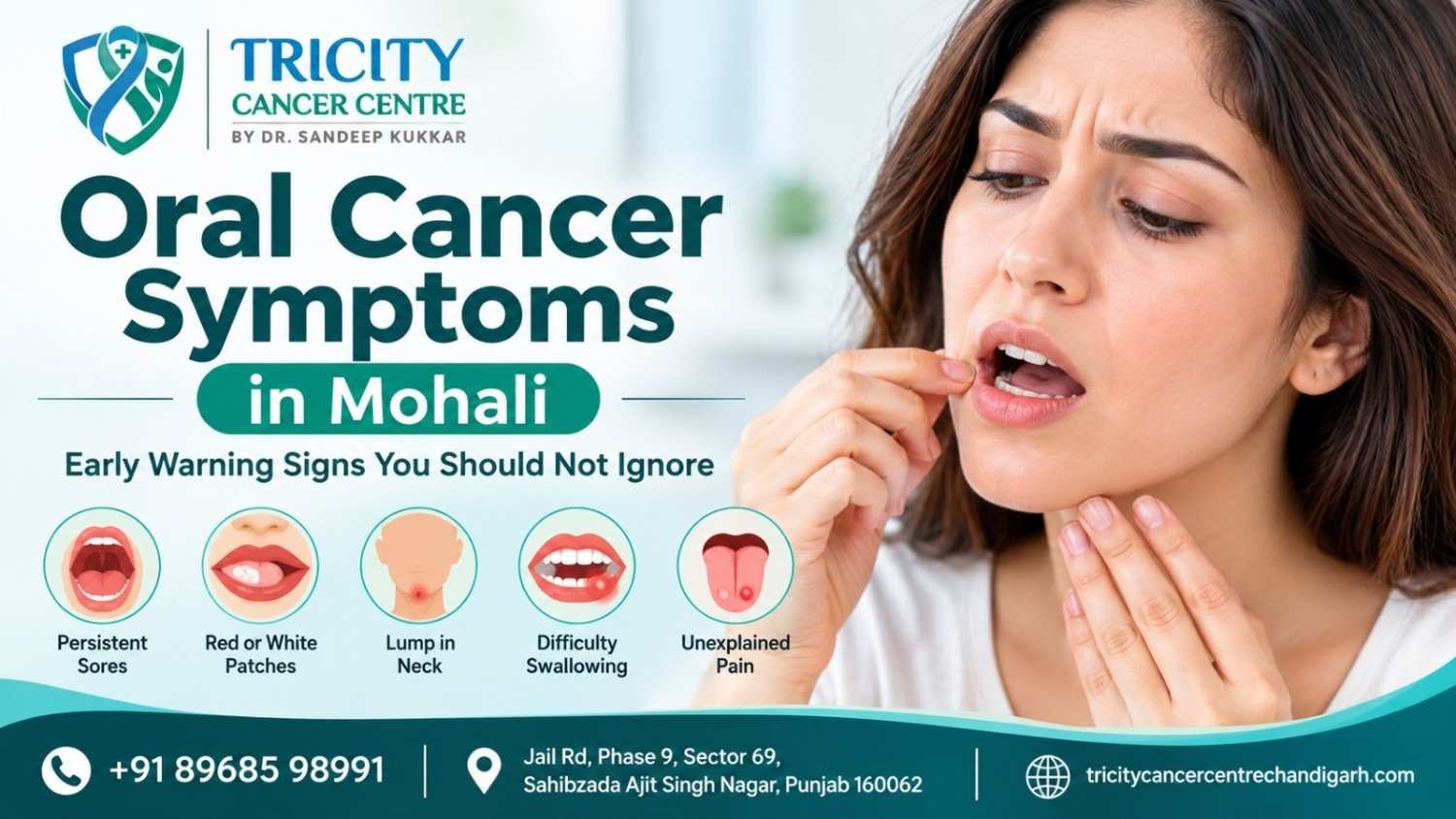
Recognising oral cancer symptoms is important because some early changes may look similar to common dental or mouth problems. Persistent ulcers, unusual patches, lumps or unexplained discomfort should not be ignored.
Oral cancer is part of the broader head and neck cancer group. understand the broader category, you can also read about Head and Neck Cancer Treatment in Mohali. However, the exact location and type of cancer are important factors in its diagnosis and treatment planning.
Early Symptoms of Oral Cancer You Should Know
The early signs of oral cancer can vary depending on the affected area. Some changes may be visible, while others may cause discomfort or difficulty with normal mouth functions.
1. Mouth Ulcers That Do Not Heal
A mouth ulcer that continues for several weeks without healing may require medical evaluation. Unlike an ordinary ulcer that gradually improves, a persistent sore may remain unchanged or become larger.
A non-healing ulcer is one of the important early warning signs of oral cancer, particularly when accompanied by bleeding, pain or a lump.
2. Red or White Patches Inside the Mouth
Unusual red or white patches on the tongue, gums, inner cheeks or other mouth tissues should be examined. Some patches may be associated with conditions such as leukoplakia or erythroplakia, which can require further assessment.
These patches are not always cancerous, but persistent changes should not be overlooked.
3. Persistent Pain or Discomfort in the Mouth
Ongoing pain in the mouth, tongue, jaw or gums without an obvious explanation can be another possible symptom. Some people may also experience tenderness or a burning sensation.
If the discomfort continues or becomes more noticeable, a clinical examination can help identify its cause.
4. Unexplained Bleeding in the Mouth
Bleeding from the tongue, gums or another area inside the mouth without an apparent injury may require evaluation. Repeated or unexplained bleeding should not be treated as a minor issue without identifying its cause.
5. Difficulty Chewing, Swallowing or Speaking
Changes in normal mouth movement can sometimes occur with oral cancer. A person may experience difficulty chewing food, swallowing or moving the tongue comfortably.
Persistent difficulty with these activities should be assessed by a qualified healthcare professional.
6. A Lump or Thickening Inside the Mouth
A new lump, swelling or thickened area on the lips, tongue, gums or inner cheek may be another warning sign. Some growths may be painless, so the absence of pain does not always mean that the change can be ignored.
7. Changes in Tongue Movement or Sensation
Unexplained numbness, reduced tongue movement or changes in sensation inside the mouth may also require examination. These symptoms can have different causes, but persistent changes should be investigated.
Symptoms of Oral Cancer in Different Parts of the Mouth
Oral cancer can develop in different areas, and its signs may depend on the location.
- Tongue cancer symptoms: A persistent sore, lump, patch, pain or restricted tongue movement.
- Inner cheek cancer symptoms: Thickening, a persistent ulcer or an unusual patch on the inner cheek.
- Gum cancer symptoms: Persistent swelling, bleeding, a lump or unexplained changes around the gums.
- Lip cancer symptoms: A persistent sore, crusted area, lump or patch on the lip.
- Floor of the mouth cancer symptoms: A persistent ulcer, swelling, pain or difficulty moving the tongue.
These signs are not enough to confirm cancer. A proper examination and, when indicated, further diagnostic tests are necessary.
Oral Cancer Risk Factors
Certain factors are associated with an increased risk of developing oral cancer. These include:
- Tobacco use: Smoking and smokeless tobacco products, including gutka and khaini, are important risk factors.
- Areca nut and betel quid: Regular use of areca nut, including products containing tobacco, can increase oral cancer risk.
- Alcohol consumption: Heavy or prolonged alcohol use is associated with an increased risk, particularly when combined with tobacco.
- Age: The risk generally increases with age.
- Sun exposure: Long-term ultraviolet exposure can contribute to cancers affecting the lips.
Avoiding tobacco and areca nut products and seeking appropriate medical advice about risk factors are important steps towards oral health.
When Should You Consult a Doctor for Oral Cancer Symptoms?
You should seek medical evaluation if you notice:
- A mouth ulcer that does not heal.
- Persistent red or white patches.
- A lump or thickening inside the mouth.
- Unexplained bleeding or numbness.
- Ongoing difficulty chewing, swallowing or speaking.
- A lump in the neck or persistent changes in tongue movement.
If an unusual mouth change persists for around two weeks or longer, arrange an examination rather than waiting for it to disappear. Some symptoms may have non-cancerous causes, but an appropriate assessment can help determine what is happening.
People in Mohali and Chandigarh experiencing persistent oral cancer warning signs should consult a qualified doctor or dentist for an examination.
How Is Oral Cancer Diagnosed?
The diagnosis of oral cancer involves examining the affected area and identifying the cause of unusual changes.
Clinical Examination
A healthcare professional examines the lips, tongue, gums, inner cheeks and other areas of the mouth. The neck may also be checked for enlarged lymph nodes or unusual lumps.
Oral Biopsy
If a suspicious area is identified, a biopsy may be recommended. During this procedure, a small tissue sample is collected and examined under a microscope. A biopsy is generally required to confirm whether an abnormal lesion is cancerous.
Imaging Tests
Depending on the clinical findings, imaging tests such as CT, MRI or other scans may be recommended to assess the extent and location of the disease.
The tests required vary from person to person. The treating specialist determines the appropriate investigations based on the examination and clinical findings.
For individuals looking for oral cancer diagnosis in Mohali, a clinical examination is an important starting point when persistent or suspicious mouth changes are present.
Can Oral Cancer Symptoms Be Mistaken for Other Mouth Conditions?
Yes. Mouth ulcers, infections, dental problems, irritation and other non-cancerous conditions can cause symptoms that resemble some warning signs of oral cancer.
For example, a mouth ulcer may develop due to accidental biting, irritation or infection. Similarly, red and white patches can occur for different reasons.
However, persistent or unexplained changes should not be self-diagnosed. A professional examination helps determine whether further testing, including a biopsy, is necessary.
Oral Cancer Evaluation and Specialist Care in Mohali and Chandigarh
Patients experiencing persistent mouth ulcers, unusual patches or other concerning changes should seek an appropriate medical evaluation. When searching for an oral cancer specialist in Mohali, patients can consider the specialist’s qualifications, clinical experience and access to diagnostic facilities.
People looking for an oral cancer doctor in Chandigarh should also consider whether the healthcare professional can guide them through the necessary examinations and investigations.
When comparing options for the best cancer hospital in Mohali, it is useful to consider the availability of oncology services, diagnostic facilities and coordination between specialists.
Tricity Cancer Centre Chandigarh provides cancer care services, including oral cancer evaluation and treatment. Dr. Sandeep Kukkar, Medical Oncologist in Mohali, is associated with the centre’s oncology care.
The appropriate treatment approach depends on the confirmed diagnosis, cancer location, stage and the patient’s overall health. Early medical evaluation can help ensure that suspicious changes are investigated without unnecessary delay.
Frequently Asked Questions
1. What are the first warning signs of oral cancer?
Early warning signs may include a persistent mouth ulcer, red or white patches, a lump inside the mouth, unexplained bleeding or ongoing pain.
2. Can a mouth ulcer be a sign of oral cancer?
Yes, a persistent mouth ulcer can be a warning sign, although most mouth ulcers are caused by non-cancerous conditions. An ulcer that does not heal should be examined.
3. How long should a mouth ulcer take to heal?
Many ordinary mouth ulcers heal within one to two weeks. An ulcer that persists for around two weeks or longer, particularly if it is unusual or worsening, should be medically evaluated.
4. Is oral cancer treatable if detected early?
Treatment depends on the cancer type, location, stage and individual health factors. Detecting and diagnosing oral cancer at an earlier stage can provide more opportunities for appropriate treatment.
5. Which doctor should I consult for suspected oral cancer?
A dentist, oral and maxillofacial specialist or an appropriate cancer specialist can evaluate suspicious mouth changes and arrange further investigations when required.
Conclusion
Recognising oral cancer symptoms and seeking timely medical evaluation are important steps in identifying unusual changes inside the mouth. Persistent ulcers, red or white patches, unexplained bleeding, lumps and difficulty chewing or swallowing should not be ignored.
People searching for an oral cancer specialist in Chandigarh or Mohali should seek an appropriate professional evaluation when they notice persistent symptoms. At Tricity Cancer Centre Chandigarh, patients can find information about oral cancer evaluation and available treatment services.
