
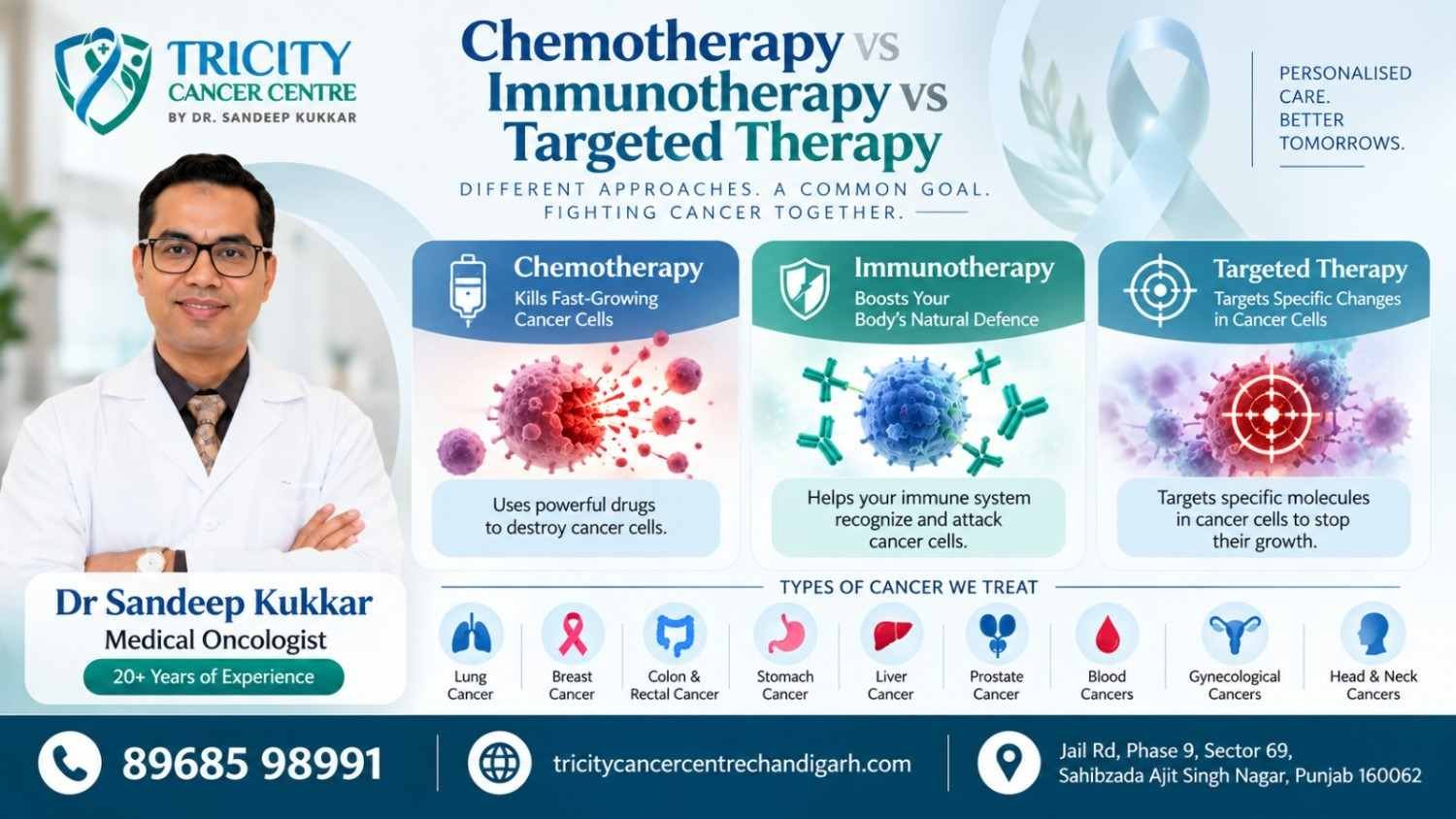
Cancer treatment has evolved considerably, and doctors now have several approaches to manage different types and stages of cancer. Among the most widely discussed options are chemotherapy, immunotherapy, and targeted therapy. Although all three aim to control cancer, they work in different ways.
Chemotherapy mainly attacks rapidly dividing cells. Immunotherapy helps the immune system recognise and fight cancer. Targeted therapy, on the other hand, focuses on specific molecules or biological changes that help cancer cells grow.
Therefore, understanding these differences can help patients have more meaningful conversations with their oncology team. However, doctors select treatment according to the cancer type, stage, biomarkers, overall health, and treatment goals.
For people researching Cancer Treatment in Mohali, learning about these options can provide a useful starting point.
What Is Chemotherapy?
Chemotherapy uses medicines to kill cancer cells or slow their growth. Many chemotherapy medicines work against rapidly dividing cells. Consequently, they can also affect certain healthy cells that divide quickly.
Doctors may recommend chemotherapy for several reasons. For example, it may:
- Shrink a tumour before surgery or radiation
- Reduce the risk of cancer returning after surgery
- Control cancer that has spread
- Slow cancer growth
- Relieve certain symptoms caused by cancer
Doctors may use chemotherapy alone or alongside other treatments. The treatment schedule, medicine and dose depend on the cancer and the patient’s individual condition.
Side Effects of Chemotherapy
Since chemotherapy can affect healthy rapidly dividing cells, patients may experience:
- Fatigue
- Nausea or vomiting
- Hair loss
- Mouth sores
- Appetite changes
- Changes in blood counts
- Increased risk of infection
However, not every patient experiences the same side effects. The specific medicines, doses and treatment schedules can significantly affect how a person responds.
Immunotherapy vs Chemotherapy: What Is the Difference?
When comparing immunotherapy vs chemotherapy, the biggest difference is how they fight cancer.
Chemotherapy directly affects cancer cells and other rapidly dividing cells. Immunotherapy, in contrast, works with the body’s immune system. It helps the immune system recognise or attack cancer more effectively.
How Chemotherapy Works
Chemotherapy uses medicines that directly interfere with cancer-cell growth or survival. Because these medicines can affect rapidly dividing cells throughout the body, they can produce a broad range of side effects.
How Immunotherapy Works
Cancer cells can sometimes avoid immune-system detection or suppress immune responses. Immunotherapy helps overcome some of these mechanisms. For example, immune checkpoint inhibitors can remove certain “brakes” on the immune system, allowing immune cells to respond more effectively against cancer.
However, immunotherapy does not work for every cancer or every patient. Doctors consider the cancer type, stage, tumour characteristics and other clinical factors before recommending it.
Side Effects of Immunotherapy
Immunotherapy produces a different pattern of side effects because it changes or stimulates immune activity. As a result, the immune system can sometimes affect healthy tissues.
Patients may experience:
- Skin reactions
- Fatigue
- Fever
- Diarrhoea
- Inflammation
- Changes affecting certain organs
Therefore, patients receiving immunotherapy need regular monitoring. Early reporting of unusual symptoms can help the medical team manage potential immune-related side effects.
Targeted Therapy vs Chemotherapy: How Are They Different?
The comparison of targeted therapy vs chemotherapy focuses mainly on the way these medicines identify and affect cancer cells.
Chemotherapy generally targets rapidly dividing cells. Targeted therapy, however, focuses on specific proteins, molecules or biological changes that help cancer cells grow, divide or spread.
For this reason, targeted therapy forms an important part of precision cancer treatment.
Before doctors recommend some targeted medicines, they may perform biomarker or molecular testing. This testing can help determine whether the patient’s tumour contains a specific target for which an appropriate treatment exists.
How Targeted Therapy Works
Depending on the medicine, targeted therapy may:
- Block signals that encourage cancer-cell growth
- Interfere with proteins involved in cancer progression
- Prevent cancer cells from receiving growth signals
- Affect processes that support tumour development
- Help deliver certain cancer-fighting substances to cells carrying a specific target
However, targeted therapy does not mean that patients will experience no side effects. The effects depend on the specific medicine and the patient’s response.
Side Effects of Targeted Therapy
Possible side effects can include:
- Fatigue
- Diarrhoea
- Skin rash or dryness
- Mouth sores
- High blood pressure
- Liver-related problems
- Nail or hair changes
- Problems with wound healing
Therefore, doctors monitor patients during treatment and adjust the treatment plan when necessary.
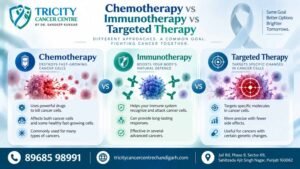
Chemotherapy vs Immunotherapy vs Targeted Therapy
Although all three treatments help doctors manage cancer, their approaches differ.
| Treatment | How It Works | Main Consideration |
|---|---|---|
| Chemotherapy | Targets rapidly dividing cells | Has a broader effect on dividing cells |
| Immunotherapy | Helps the immune system fight cancer | Works for selected cancers and patients |
| Targeted Therapy | Acts on specific molecular targets | Often requires suitable tumour characteristics |
Therefore, patients should not view one treatment as universally “stronger” or “better.” Instead, doctors choose an approach based on the patient’s cancer and the evidence supporting each treatment.
Can Chemotherapy, Targeted Therapy and Immunotherapy Be Combined?
Yes, doctors can combine chemotherapy, targeted therapy and immunotherapy in selected cancer situations. However, doctors do not automatically combine all three treatments.
Instead, the oncology team considers whether a combination offers a meaningful benefit for a particular cancer. For example, doctors may combine chemotherapy with immunotherapy in certain cancers, while targeted therapy may accompany other treatments when testing identifies an appropriate molecular target.
Before combining treatments, doctors consider:
- Cancer type
- Cancer stage
- Tumour biomarkers
- Previous treatments
- Overall health
- Other medical conditions
- Expected benefits
- Possible risks and side effects
Moreover, combining treatments can make treatment more complex. It can also introduce additional side effects. Therefore, doctors carefully balance the potential benefits against the risks.
The objective is not simply to use more treatments. Instead, the objective is to select the combination that makes medical sense for the patient’s specific cancer.
Can Chemotherapy and Immunotherapy Be Used Together?
Yes. In some cancers, doctors use chemotherapy and immunotherapy together. The two approaches work differently, so combining them can provide a treatment strategy that targets cancer through different mechanisms.
However, doctors decide whether this combination is appropriate after considering the cancer type, stage, treatment goals and patient-specific factors.
Can Chemotherapy and Targeted Therapy Be Used Together?
Yes. Doctors may also combine chemotherapy and targeted therapy in selected cancers.
In this situation, chemotherapy provides its broader anti-cancer effect, while targeted therapy focuses on a specific biological feature of the tumour when a suitable target exists.
Therefore, biomarker testing can play an important role in deciding whether a targeted medicine may be useful.
How Do Doctors Choose the Right Cancer Treatment?
There is no single treatment plan that works for every cancer patient. Instead, doctors review multiple factors before recommending treatment.
These may include:
- Cancer type
- Stage of cancer
- Pathology results
- Imaging findings
- Biomarker or molecular test results
- Previous treatments
- Overall health
- Other medical conditions
- Treatment goals
For instance, biomarker testing may help identify whether a patient could benefit from a particular targeted therapy or immunotherapy.
As a result, two patients with the same broad type of cancer may receive different treatment plans.
Why Do Cancer Treatment Side Effects Differ?
Side effects can vary significantly from one person to another. The specific medicine, dose, treatment combination and individual health can all influence the patient’s experience.
For example, chemotherapy can commonly affect rapidly dividing healthy cells, while immunotherapy can cause immune-related inflammation. Similarly, targeted therapies can produce side effects related to the biological pathway they affect.
Therefore, patients should inform their oncology team about new, unusual or worsening symptoms. Doctors can then assess the symptoms and provide appropriate management.
Patients should also remember that having more side effects does not necessarily mean that a treatment is working better.
Cancer Treatment in Mohali at Tricity Cancer Centre Chandigarh
For patients exploring Cancer Treatment in Mohali, understanding the differences between chemotherapy, immunotherapy and targeted therapy can help them prepare for discussions with an oncologist.
At Tricity Cancer Centre Chandigarh, cancer care focuses on understanding each patient’s diagnosis, disease status and individual treatment requirements.
Dr Sandeep Kukkar, Medical Oncologist with 20+ years of experience, provides oncology care with an individualised approach to cancer treatment.
Depending on the patient’s condition, the treatment plan may involve chemotherapy, immunotherapy, targeted therapy or a suitable combination. However, the appropriate option depends on the patient’s complete medical evaluation.
Patients should therefore discuss their diagnosis, treatment goals, expected benefits and possible side effects with their oncology team before starting treatment.
Conclusion
When comparing chemotherapy vs immunotherapy vs targeted therapy, the key difference lies in how each approach works.
Chemotherapy mainly targets rapidly dividing cells. In contrast, immunotherapy helps the immune system recognise and fight cancer. Targeted therapy focuses on specific molecular characteristics that contribute to cancer growth.
Furthermore, doctors may combine different approaches when the patient’s cancer characteristics and treatment evidence support such a strategy. However, treatment decisions always require individual medical assessment.
For this reason, patients should avoid choosing a cancer treatment based only on online information. Instead, they should discuss their diagnosis and available options with a qualified medical oncologist.
FAQs
1. Is immunotherapy better than chemotherapy?
Not necessarily. Both treatments have different roles. Doctors select the appropriate option according to the cancer type, stage, biomarkers and patient’s overall condition.
2. What is the main difference between targeted therapy and chemotherapy?
Chemotherapy generally targets rapidly dividing cells, whereas targeted therapy focuses on specific molecular targets associated with cancer growth.
3. Can chemotherapy and immunotherapy be given together?
Yes. Doctors may combine them for certain cancers when clinical evidence and the patient’s condition support the combination.
4. Can chemotherapy and targeted therapy be used together?
Yes. Doctors may combine them for selected cancers, particularly when testing identifies a suitable target for targeted therapy.
5. Can chemotherapy, targeted therapy and immunotherapy all be combined?
In selected situations, doctors may use multiple treatment approaches. However, the decision depends on the cancer type, stage, biomarkers, previous treatments and overall health.
