
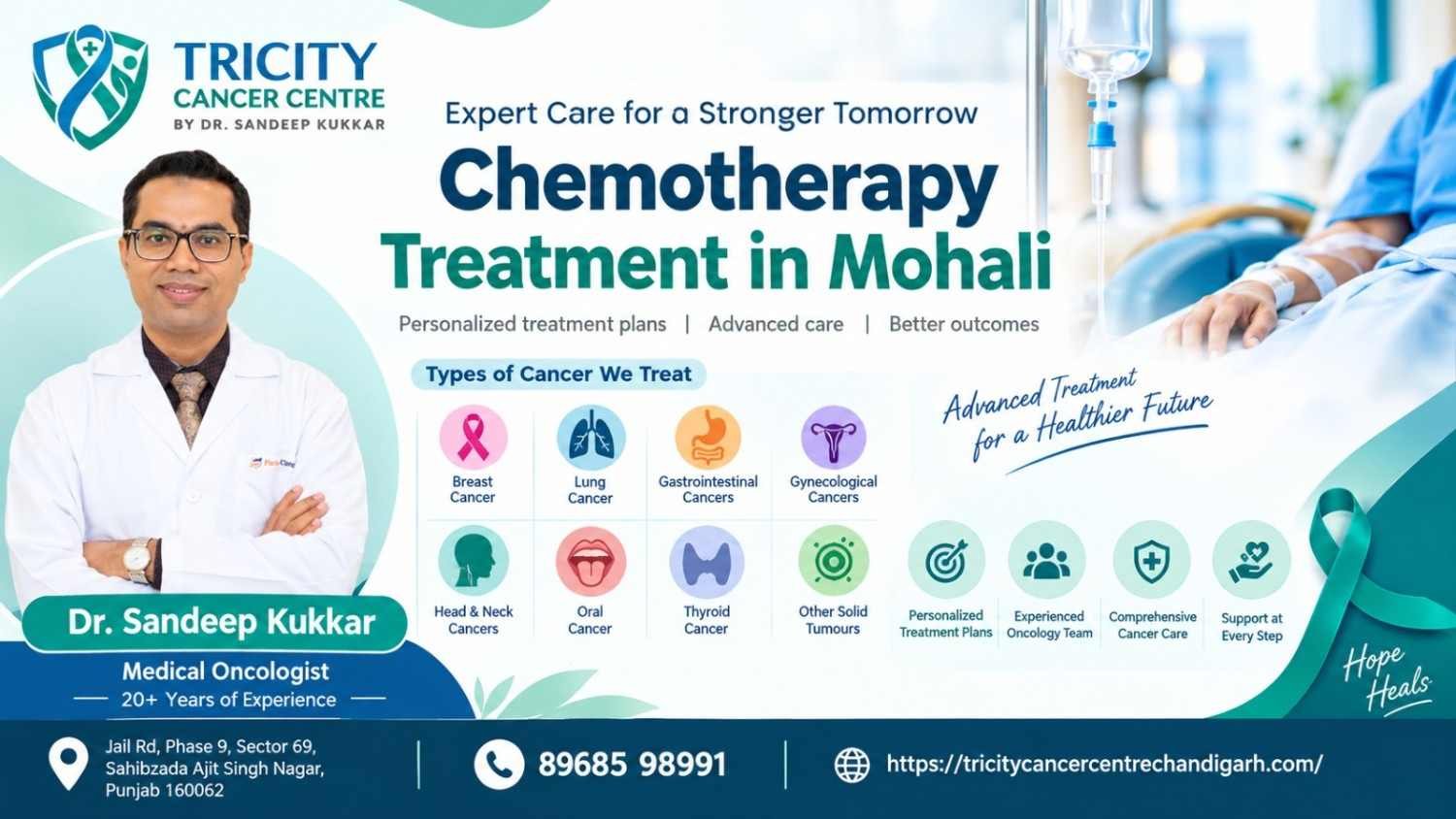
A cancer diagnosis can bring many questions about treatment options, medicines, possible side effects, and the overall treatment journey. Chemotherapy Treatment in Mohali is an important treatment option used for several types and stages of cancer. Depending on the diagnosis, chemotherapy may be used alone or along with surgery, radiation therapy, immunotherapy, targeted therapy, or other cancer treatments.
Tricity Cancer Centre Chandigarh provides specialized cancer care and medical oncology consultation under the guidance of Dr. Sandeep Kukkar, Medical Oncologist with 20+ years of experience. Treatment planning is based on the patient’s cancer type, stage, medical history, test results, and overall health.
What Is Chemotherapy?
Chemotherapy uses medicines to destroy cancer cells or slow their growth and multiplication. Since chemotherapy medicines can travel through the bloodstream, they can work on cancer cells in different parts of the body.
The purpose of chemotherapy can vary from patient to patient. Depending on the cancer and treatment plan, it may be used to treat cancer, reduce the risk of recurrence, shrink a tumour before surgery or radiation, control cancer growth, or help manage symptoms.
Patients considering Chemotherapy Treatment in Mohali should first undergo an appropriate evaluation so that the oncology team can determine whether chemotherapy is suitable for their particular diagnosis.
When Is Chemotherapy Used?
Chemotherapy may be recommended at different stages of cancer treatment. Some patients may receive chemotherapy before surgery, while others may receive it after surgery.
It can also be used alongside radiation therapy or other systemic cancer treatments. In certain advanced cancers, chemotherapy may be used to control disease progression or manage cancer-related symptoms.
The decision depends on factors such as:
- Type of cancer
- Stage of cancer
- Tumor characteristics
- Previous treatments
- Overall health
- Response to earlier treatment
Because every cancer diagnosis is different, chemotherapy should be planned by an appropriately qualified oncology team.
Types of Chemotherapy
There are different chemotherapy medicines, and the choice depends on the cancer being treated. An oncologist may recommend one medicine or a combination of medicines.
Chemotherapy can be administered through different routes, including:
- Intravenous (IV) chemotherapy
- Oral chemotherapy
- Injection-based chemotherapy
- Other specialized methods for selected cancers
The medicine, dosage, treatment schedule, and number of cycles are determined according to the patient’s diagnosis and treatment plan.
What Happens During Chemotherapy?
Before starting chemotherapy, the oncologist reviews the patient’s medical history, diagnosis, pathology reports, imaging, and other relevant investigations. Blood tests may also be required before individual treatment sessions.
Chemotherapy is commonly administered in cycles. A cycle generally consists of a treatment period followed by a recovery period. The number of cycles and the interval between treatments vary according to the type of cancer, medicines being used, treatment goals, and individual response.
During the treatment journey, the oncology team monitors the patient’s health and may recommend supportive measures to help manage treatment-related symptoms.
Common Side Effects of Chemotherapy
Chemotherapy can affect some healthy cells as well as cancer cells, which may lead to side effects. However, side effects vary considerably from one patient to another.
Possible side effects can include:
- Fatigue
- Nausea or vomiting
- Hair loss
- Changes in appetite
- Mouth sores
- Low blood cell counts
- Increased risk of infection
- Constipation or diarrhea
- Skin or nail changes
- Nerve-related symptoms
Not every patient experiences all of these effects. Their severity can also depend on the specific chemotherapy medicines, dosage, treatment duration, and individual health.
The oncology team can provide guidance about managing side effects during treatment.
Personalized Chemotherapy Care in Mohali
When searching for Chemotherapy Treatment in Mohali, patients should consider the importance of appropriate oncology evaluation and individualized treatment planning.
People researching the Best Oncologist in Mohali can consider factors such as medical oncology specialization, experience with different cancer types, treatment approach, and the opportunity to discuss their diagnosis and treatment options directly with an oncology specialist.
At Tricity Cancer Centre Chandigarh, Dr. Sandeep Kukkar provides medical oncology consultation and develops treatment plans according to individual cancer-related requirements. Depending on the diagnosis, chemotherapy may form part of a broader treatment approach involving surgery, radiation therapy, immunotherapy, targeted therapy, or other treatments.
Chemotherapy and Different Types of Cancer
Chemotherapy can be used in the treatment of different cancers. Depending on the diagnosis, it may be considered for conditions such as:
- Breast cancer
- Lung cancer
- Gastrointestinal cancers
- Gynecological cancers
- Head and neck cancers
- Oral cancer
- Thyroid cancer
- Other solid tumours
The role of chemotherapy differs for each cancer. The treatment plan is determined after evaluating the specific diagnosis, stage, pathology, and other relevant clinical factors.
How Is Treatment Response Monitored?
During chemotherapy, doctors monitor the patient’s response through clinical assessment and appropriate investigations.
Depending on the cancer, monitoring may include blood tests, CT scans, MRI, PET-CT scans, physical examinations, or other diagnostic investigations.
Patients should understand that experiencing side effects does not necessarily mean that chemotherapy is working, and having fewer side effects does not necessarily mean that treatment is ineffective. Treatment response is assessed using appropriate medical and diagnostic evaluation.
Choosing a Cancer Care Centre in Mohali
When searching for a Cancer Treatment Hospital in Mohali, patients and families may consider factors such as oncology expertise, available treatment options, diagnostic support, treatment monitoring, and access to personalized medical consultation.
Tricity Cancer Centre Chandigarh provides specialized cancer care and medical oncology consultation in Sahibzada Ajit Singh Nagar, Mohali. Dr. Sandeep Kukkar, Medical Oncologist, evaluates each patient’s diagnosis and discusses appropriate treatment options based on their individual clinical requirements.
Patients can bring their previous medical records, pathology reports, imaging scans, blood reports, and details of previous treatment to an oncology consultation.
When Should You Consult a Medical Oncologist?
An oncology consultation may be appropriate when:
- A biopsy or diagnostic investigation confirms cancer
- A patient has been referred to a medical oncologist
- Chemotherapy has been recommended
- A patient needs to understand different systemic treatment options
- Cancer has returned or progressed
- Further treatment planning is required after surgery or another treatment
A medical oncologist can explain the purpose of recommended treatment, possible side effects, treatment schedule, monitoring requirements, and other relevant options.
Chemotherapy Treatment at Tricity Cancer Centre Chandigarh
At Tricity Cancer Centre Chandigarh, cancer patients can consult Dr. Sandeep Kukkar, Medical Oncologist, for evaluation and treatment planning.
The centre provides specialized cancer care for patients requiring medical oncology consultation. Treatment recommendations are based on the individual’s diagnosis and clinical requirements rather than using the same treatment approach for every patient.
If you are looking for Chemotherapy Treatment in Mohali, a consultation can help you understand whether chemotherapy is appropriate for your diagnosis and how it may fit into your overall cancer treatment plan.
Frequently Asked Questions
1. What is chemotherapy used for?
Chemotherapy may be used to treat cancer, control its growth, reduce the risk of recurrence, shrink tumours before another treatment, or help manage certain cancer-related symptoms. Its purpose depends on the type and stage of cancer.
2. Does every cancer patient need chemotherapy?
No. Chemotherapy is not necessary for every cancer patient. Treatment depends on the cancer type, stage, tumour characteristics, previous treatment, and overall health.
3. What are the common side effects of chemotherapy?
Common side effects may include fatigue, nausea, vomiting, hair loss, appetite changes, mouth sores, low blood counts, and changes in bowel habits. Side effects vary depending on the medicines and individual patient.
4. How long does chemotherapy treatment take?
The duration varies depending on the cancer type, medicines being used, treatment goals, and individual response. Chemotherapy is often administered in cycles with treatment periods followed by recovery periods.
Conclusion
Chemotherapy is an important cancer treatment that may be used for different types and stages of cancer. The medicines, dosage, schedule, and treatment goals should be determined according to the individual patient’s diagnosis and clinical requirements.
Tricity Cancer Centre Chandigarh, under the guidance of Dr. Sandeep Kukkar, provides specialized medical oncology consultation and cancer treatment planning. If you are researching Chemotherapy Treatment in Mohali, consulting an experienced medical oncologist can help you understand the treatment options appropriate for your individual condition.
