
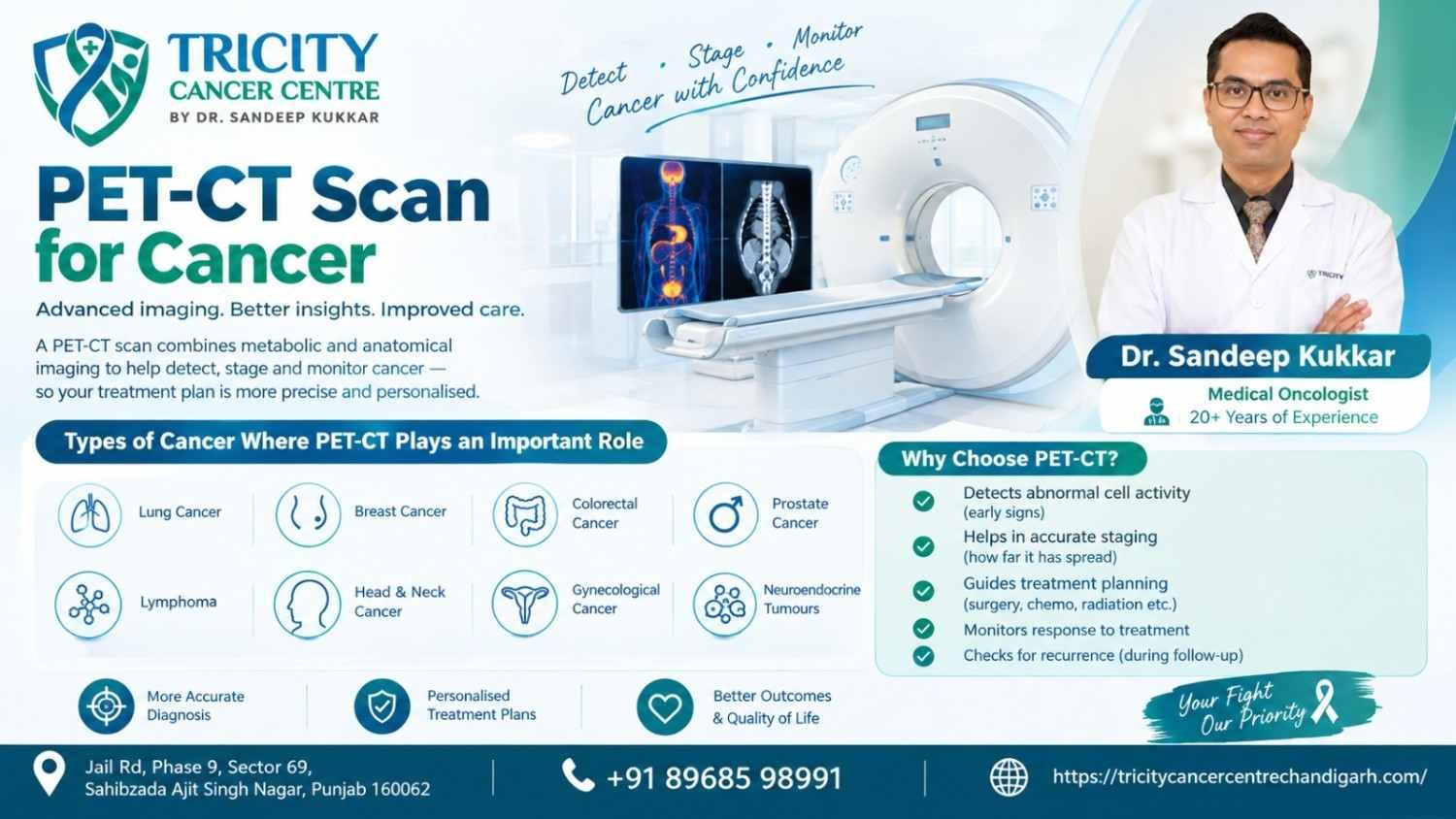
If your oncologist has advised a PET CT scan for cancer, you may have questions about why you need the scan, what it can show, and how it fits into your treatment plan. A PET-CT combines functional information from PET imaging with detailed anatomical images from CT. Therefore, doctors can evaluate abnormal activity while also identifying its location in the body.
For patients looking for a PET CT scan in Mohali, understanding the purpose of this test can make the process easier to understand. Moreover, doctors may recommend PET-CT at different stages of cancer care, depending on the cancer type, treatment plan, and individual clinical situation. For patients seeking oncology care in the region, Tricity Cancer Centre Chandigarh provides medical oncology consultations and cancer-care guidance based on the individual clinical situation.
What Is a PET-CT Scan?
A PET-CT scan combines two imaging techniques:
PET (Positron Emission Tomography)
PET provides information about metabolic or other biological activity in tissues. It uses a small amount of radioactive tracer to highlight areas with increased activity.
CT (Computed Tomography)
CT produces detailed anatomical images of organs, tissues, and other structures inside the body.
The most commonly used PET tracer is FDG (fluorodeoxyglucose), a radioactive form of glucose. Many cancer cells use glucose at higher rates than surrounding normal tissue. As a result, areas with increased metabolic activity may become visible on PET imaging. However, increased FDG uptake does not always mean cancer because inflammation and infection can also cause increased uptake.
By combining PET and CT images, doctors can assess both where an abnormal area is located and how metabolically active it appears.
Why Is a PET CT Scan for Cancer Done?
Moreover, doctors may recommend a PET CT scan for cancer for several reasons throughout the cancer-care journey.
1. Cancer Evaluation
First, PET-CT can help doctors evaluate suspicious areas and look for signs of disease elsewhere in the body. However, doctors do not interpret the scan in isolation. Instead, they consider PET-CT findings alongside the patient’s medical history, examination, laboratory tests, other imaging, and biopsy results when appropriate.
2. Cancer Staging
After doctors diagnose cancer, determining its extent becomes an important part of treatment planning. In appropriate cancers, PET-CT can help identify involvement of lymph nodes or distant areas.
Therefore, staging helps the medical team understand how far the disease has spread and plan an appropriate treatment approach.
3. Treatment Planning
Furthermore, PET-CT findings can provide useful information for treatment planning. Depending on the cancer type and stage, doctors may consider chemotherapy, immunotherapy, targeted therapy, radiation therapy, surgery, or a combination of treatments.
The oncology team considers the scan along with other clinical information before deciding on the next step.
4. Monitoring Treatment Response
In addition, PET-CT can sometimes help doctors assess how cancer responds to treatment by showing changes in metabolic activity. However, the usefulness and timing of follow-up imaging depend on the cancer type, treatment, and individual clinical situation.
5. Evaluating Possible Recurrence
Finally, doctors may use PET-CT in selected situations after cancer treatment when they need to evaluate whether the disease has returned. However, doctors do not routinely recommend PET-CT for every cancer survivor. Instead, they consider factors such as cancer type, previous treatment, symptoms, and clinical findings.
What Types of PET Scans Are Used?
The appropriate PET tracer depends on the cancer type and the clinical question.
FDG PET-CT is widely used for many cancers because FDG provides information about glucose metabolism.
PSMA PET-CT may help evaluate appropriate prostate cancer cases because PSMA-targeted tracers can identify PSMA-positive disease.
DOTATATE PET-CT may be used for certain neuroendocrine tumours.
Therefore, patients should not choose a PET scan simply based on the name of the test. Instead, the treating medical team should select the appropriate imaging method according to the cancer type and clinical question.
What Happens During a PET-CT Scan?
Preparation can vary depending on the tracer and imaging protocol. For an FDG PET-CT, patients are commonly asked to fast for several hours and may need to drink water. The imaging team may also check blood glucose because glucose levels can affect FDG imaging.
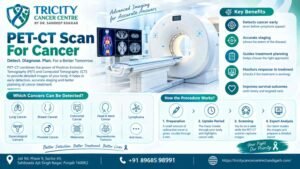
Generally, the process includes:
- Preparation and medical history review
- Tracer injection through a vein
- A waiting period while the tracer circulates
- PET and CT imaging
- Review and interpretation of the images
During the scan, you need to remain still while the scanner captures the images. The injection may cause brief discomfort, but the imaging procedure itself is generally painless.
Is a PET-CT Scan Safe?
PET-CT exposes patients to radiation from both the radioactive tracer and the CT component. However, doctors consider the potential medical benefit when recommending the examination.
Additionally, tell your healthcare team if you are pregnant or breastfeeding. You should also share information about medical conditions, medications, diabetes, allergies, and previous imaging as advised by the imaging centre.
PET-CT vs CT Scan: What Is the Difference?
| PET-CT | CT Scan |
|---|---|
| Provides metabolic or functional information along with anatomy | Primarily provides detailed anatomical information |
| Uses a radioactive tracer for the PET component | Uses X-rays to create detailed images |
| Can help evaluate abnormal metabolic activity in appropriate cancers | Provides detailed structural information |
| Can help assess treatment response in selected situations | Can help with diagnosis, staging, treatment planning, and follow-up |
Therefore, PET-CT and CT are not simply interchangeable. Your doctor chooses the appropriate imaging test based on the clinical question and your individual situation.
Why Should Doctors Interpret a PET-CT Report in Context?
A PET-CT report represents one part of the overall cancer assessment. For example, an area of increased tracer uptake does not automatically mean cancer. Therefore, doctors consider the scan alongside the cancer type, symptoms, biopsy findings, previous imaging, treatment history, and other investigations.
Moreover, some findings may require additional imaging, follow-up, or biopsy before doctors can reach a clear conclusion.
This is why consultation with a Medical Oncologist in Mohali can help patients understand what their scan findings mean in relation to their overall cancer-care plan.
PET-CT-Guided Cancer Care with Dr. Sandeep Kukkar
Dr. Sandeep Kukkar, Medical Oncologist at Tricity Cancer Centre Chandigarh, provides cancer-care consultations for patients from Mohali, Chandigarh, and surrounding areas.
When PET-CT is recommended, doctors can consider its findings alongside biopsy reports, clinical history, laboratory investigations, previous scans, and treatment response. Together, these findings can help the oncology team determine appropriate next steps for the patient’s cancer care.
Furthermore, patients searching for the Best Oncologist in Mohali should consider relevant oncology experience, appropriate treatment planning, and individualized medical guidance. Rather than relying only on search rankings, patients should also consider how the specialist approaches their specific cancer-care needs.
Conclusion
Tricity Cancer Centre Chandigarh focuses on individualized cancer care, helping patients understand diagnostic findings and plan appropriate next steps with their oncology team.
Frequently Asked Questions
Does a PET-CT scan hurt?
Generally, the scan itself is painless. However, the tracer is usually given through an intravenous injection, which may cause brief discomfort.
How long does a PET-CT scan take?
The actual scanning usually takes around 30 minutes. However, the total appointment can take longer because patients need preparation and a waiting period after the tracer injection.
Do I need to fast before a PET-CT?
For many FDG PET-CT examinations, patients need to fast for several hours. However, preparation can vary, so always follow the instructions provided by your imaging centre.
Can a PET-CT confirm cancer?
No. PET-CT can provide important information about abnormal metabolic activity, but imaging alone does not always establish a cancer diagnosis. Depending on the situation, doctors may need other investigations, including a biopsy.
How often should a PET-CT be done?
There is no single schedule for every patient. Instead, doctors determine the frequency according to the cancer type, stage, treatment, symptoms, previous findings, and clinical reason for the scan.
