
A breast cancer diagnosis can bring many emotions, questions, and uncertainties. However, understanding what happens from diagnosis to treatment and recovery can help patients and their families feel more prepared. With timely diagnosis, appropriate treatment planning, and continuous medical support, breast cancer care can be tailored according to the individual needs of each patient.
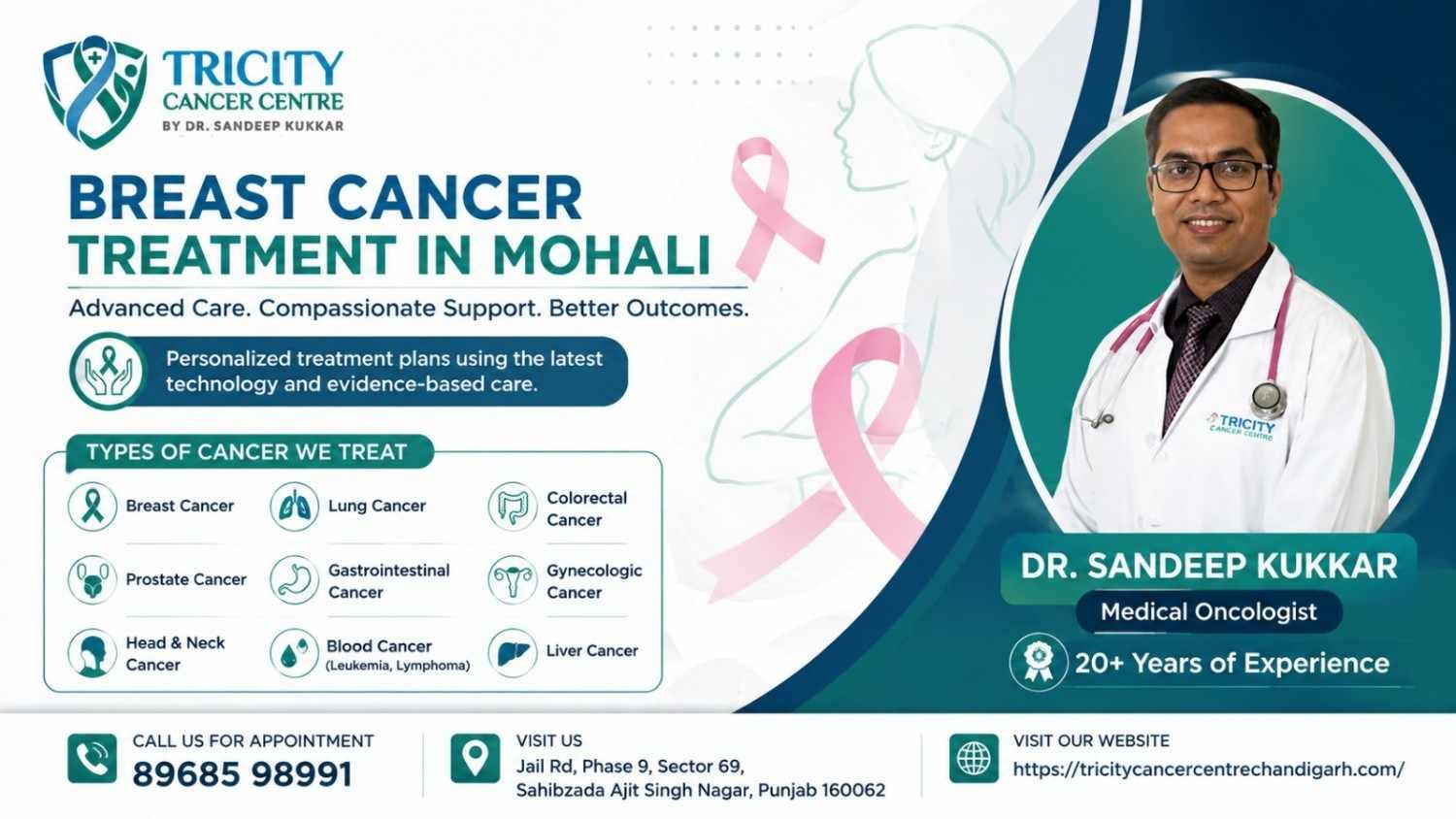
For those seeking Breast Cancer Treatment in Mohali, understanding the available treatment options and the importance of personalised oncology care is an essential first step. At Tricity Cancer Centre Chandigarh, Dr. Sandeep Kukkar focuses on evidence-based, patient-centred, and personalised cancer care.
Understanding Breast Cancer Treatment in Mohali
Breast cancer is not the same for every patient. Different types of breast cancer can have different biological characteristics and may require different treatment approaches.
Before creating a treatment plan, doctors may consider several factors, including:
- Type of breast cancer
- Size and location of the tumour
- Stage of cancer
- Lymph node involvement
- Hormone receptor status
- HER2 status
- Other tumour characteristics
- Age and overall health of the patient
- Previous medical history
- Individual treatment goals
A personalised treatment plan helps the oncology team select the most suitable approach based on the patient’s specific diagnosis.
Step 1: Diagnosis and Evaluation
The first stage of the breast cancer journey is confirming the diagnosis and understanding the characteristics of the disease.
Depending on the patient’s condition, the evaluation may involve:
- Clinical breast examination
- Mammography
- Breast ultrasound
- MRI in selected cases
- Biopsy
- Pathology examination
- Hormone receptor testing
- HER2 testing
- Additional investigations for staging when required
A biopsy plays an important role because it helps identify the type of breast cancer and provides information that can influence further treatment decisions.
Why Accurate Diagnosis Matters for Breast Cancer Treatment in Mohali
Accurate diagnosis helps the treating team understand:
- The type of breast cancer
- The extent of the disease
- Whether lymph nodes are involved
- Whether the cancer is hormone receptor-positive
- Whether HER2-targeted treatment may be considered
- Which treatment sequence may be appropriate
This information allows doctors to create an individualised treatment strategy instead of following a one-size-fits-all approach.
Step 2: Understanding the Stage of Breast Cancer
After the diagnosis is confirmed, the doctor evaluates the stage of the cancer. Staging generally considers:
- Tumour size and extent
- Involvement of nearby lymph nodes
- Whether the cancer has spread to distant organs
The stage of breast cancer can influence the treatment approach. Some patients may undergo surgery first, while others may receive systemic treatment before surgery.
The sequence of treatment is decided according to the individual clinical situation.
Step 3: Treatment Options for Breast Cancer Treatment in Mohali
Breast cancer treatment may involve one treatment or a combination of different therapies.
Surgery
Surgery may be recommended to remove the cancerous tissue and assess or treat nearby lymph nodes.
Depending on the individual case, options may include:
- Breast-conserving surgery
- Mastectomy
- Sentinel lymph node procedures
- Additional lymph node surgery when required
The surgical approach depends on several factors, including tumour size, location, stage, and patient preferences.
Chemotherapy
Chemotherapy uses anti-cancer medicines to destroy or control cancer cells. It may be recommended:
- Before surgery
- After surgery
- Along with other treatments
- For advanced or metastatic breast cancer
The decision to use chemotherapy depends on the cancer subtype, stage, tumour biology, and expected benefit for the individual patient.
Hormonal Therapy
Some breast cancers are hormone receptor-positive. In such cases, hormonal therapy may be recommended to block or reduce the influence of hormones that can support the growth of certain cancer cells.
The type and duration of treatment depend on the patient’s individual diagnosis.
Targeted Therapy
Targeted therapy focuses on specific characteristics or proteins associated with cancer cells. For certain types of breast cancer, including HER2-positive breast cancer, targeted medicines may form an important part of treatment.
Immunotherapy
Immunotherapy helps the body’s immune system recognise and fight cancer cells. It may be considered for selected patients and specific breast cancer types.
Radiation Therapy
Radiation therapy uses high-energy radiation to target cancer cells. It may be recommended after surgery or in other clinical situations depending on the extent and characteristics of the cancer.
About Dr. Sandeep Kukkar
Dr. Sandeep Kukkar is an experienced Medical Oncologist with over 20 years of experience in cancer care. He is associated with Tricity Cancer Centre Chandigarh and focuses on personalised, evidence-based, and compassionate cancer treatment.
Education and Professional Background
Dr. Sandeep Kukkar’s qualifications include:
- MBBS
- M.D. in Pediatrics
- D.M. in Medical Oncology
- Advanced Certification in Molecular Oncology (ACMO)
He has expertise in managing various cancers, including breast, lung, gastrointestinal, gynecological, blood, head and neck, and genitourinary cancers.
Clinical Experience and Expertise
Dr. Sandeep Kukkar has received clinical training and experience at institutions including:
- Government Medical College & New Civil Hospital, Surat
- Sir Ganga Ram Hospital, New Delhi
- Deen Dayal Upadhyay Hospital, New Delhi
- Gujarat Cancer & Research Institute (GCRI), Ahmedabad
Since 2016, he has served as Director & Head of Medical Oncology, with a focus on strengthening oncology services, standardised treatment protocols, and multidisciplinary cancer care.
His clinical expertise includes the management of:
- Breast cancer
- Lung cancer
- Head and neck cancers
- Gastrointestinal cancers
- Gynecological cancers
- Blood cancers
- Pediatric cancers
- Genitourinary cancers
He also has experience in treatment approaches such as:
- Chemotherapy
- Hormonal therapy
- Immunotherapy
- Advanced cancer care
- Precision oncology
- Radiation therapy as part of multidisciplinary cancer management
- PET-CT-based diagnostic evaluation where clinically appropriate
A Patient-Centred Approach to Breast Cancer Treatment in Mohali
Cancer treatment is not only about selecting the right medicines or procedures. Patients and their families also need clear communication and support throughout the journey.
Dr. Sandeep Kukkar approach focuses on:
- Personalised treatment strategies
- Evidence-based treatment decisions
- Honest communication
- Explaining treatment options clearly
- Emotional support for patients and families
- Improving quality of life during and after treatment
- Long-term follow-up care
The goal is to help patients understand every stage of their treatment and participate in informed decision-making.
Step 4: Managing Side Effects During Treatment
Side effects can vary depending on the treatment type, medicines used, treatment duration, and the patient’s overall health.
Possible side effects may include:
- Fatigue
- Nausea or vomiting
- Appetite changes
- Hair loss with certain treatments
- Increased risk of infection
- Pain or discomfort
- Hormonal symptoms
- Emotional stress or anxiety
Patients should inform their oncology team about new or worsening symptoms. Supportive care can help manage treatment-related concerns and improve comfort.
Step 5: Recovery After Breast Cancer Treatment
Recovery is an important part of the cancer journey. Completing active treatment does not always mean that medical care ends.
Recovery and survivorship may involve:
- Regular follow-up appointments
- Monitoring for recurrence or new symptoms
- Managing long-term treatment effects
- Nutritional guidance
- Gradual return to physical activity
- Rehabilitation after surgery, when required
- Emotional and psychological support
- Ongoing hormonal or other maintenance treatments when prescribed
Every patient’s recovery timeline can be different. Some individuals may return to their routine quickly, while others may require additional time and support.
Why Follow-Up Care Is Important
Regular follow-up helps the oncology team:
- Monitor recovery
- Manage long-term side effects
- Review ongoing treatment
- Discuss new symptoms
- Provide survivorship guidance
- Address emotional and physical concerns
Patients should report any persistent or unusual symptoms to their treating doctor.
Why Consider Tricity Cancer Centre Chandigarh?
Tricity Cancer Centre Chandigarh provides medical oncology services led by Dr. Sandeep Kukkar, with a focus on expert diagnosis, personalised treatment planning, and compassionate cancer care.
The centre’s services include treatment and management for several cancers, including breast cancer, as well as approaches such as chemotherapy, immunotherapy, hormonal therapy, advanced cancer care, and PET-CT evaluation.
For patients exploring Breast Cancer Treatment in Mohali, important factors to consider include:
- Experience of the oncology specialist
- Accurate diagnosis
- Personalised treatment planning
- Clear communication
- Evidence-based treatment options
- Coordination with relevant specialists
- Supportive care
- Long-term follow-up
Frequently Asked Questions About Breast Cancer Treatment in Mohali
1. What treatment options are available for Breast Cancer Treatment in Mohali?
Depending on the type and stage of breast cancer, treatment may include surgery, chemotherapy, hormonal therapy, targeted therapy, immunotherapy, radiation therapy, or a combination of these approaches. The treatment plan should be based on the patient’s individual diagnosis and clinical condition.
2. Does every breast cancer patient need chemotherapy?
No. Chemotherapy is not required for every patient. The decision depends on factors such as the cancer stage, tumour biology, hormone receptor status, HER2 status, and the expected benefit of chemotherapy.
3. How long does recovery take after breast cancer treatment?
Recovery varies from person to person. It depends on the treatment received, whether surgery was performed, the patient’s overall health, and any treatment-related side effects. Regular follow-up and appropriate supportive care can play an important role during recovery.
Conclusion
The journey of Breast Cancer Treatment in Mohali involves accurate diagnosis, personalised treatment, supportive care, recovery, and regular follow-up. Moreover, with timely medical guidance and an individualised treatment plan, patients can better understand their options and move forward with greater confidence. Additionally, regular monitoring and appropriate support can help patients manage different stages of their treatment and recovery.
Furthermore, at Tricity Cancer Centre Chandigarh, Dr. Sandeep Kukkar and the oncology team focus on providing evidence-based and patient-centred cancer care. Therefore, patients can receive guidance and support throughout their treatment journey, from diagnosis and treatment planning to recovery and follow-up.
