
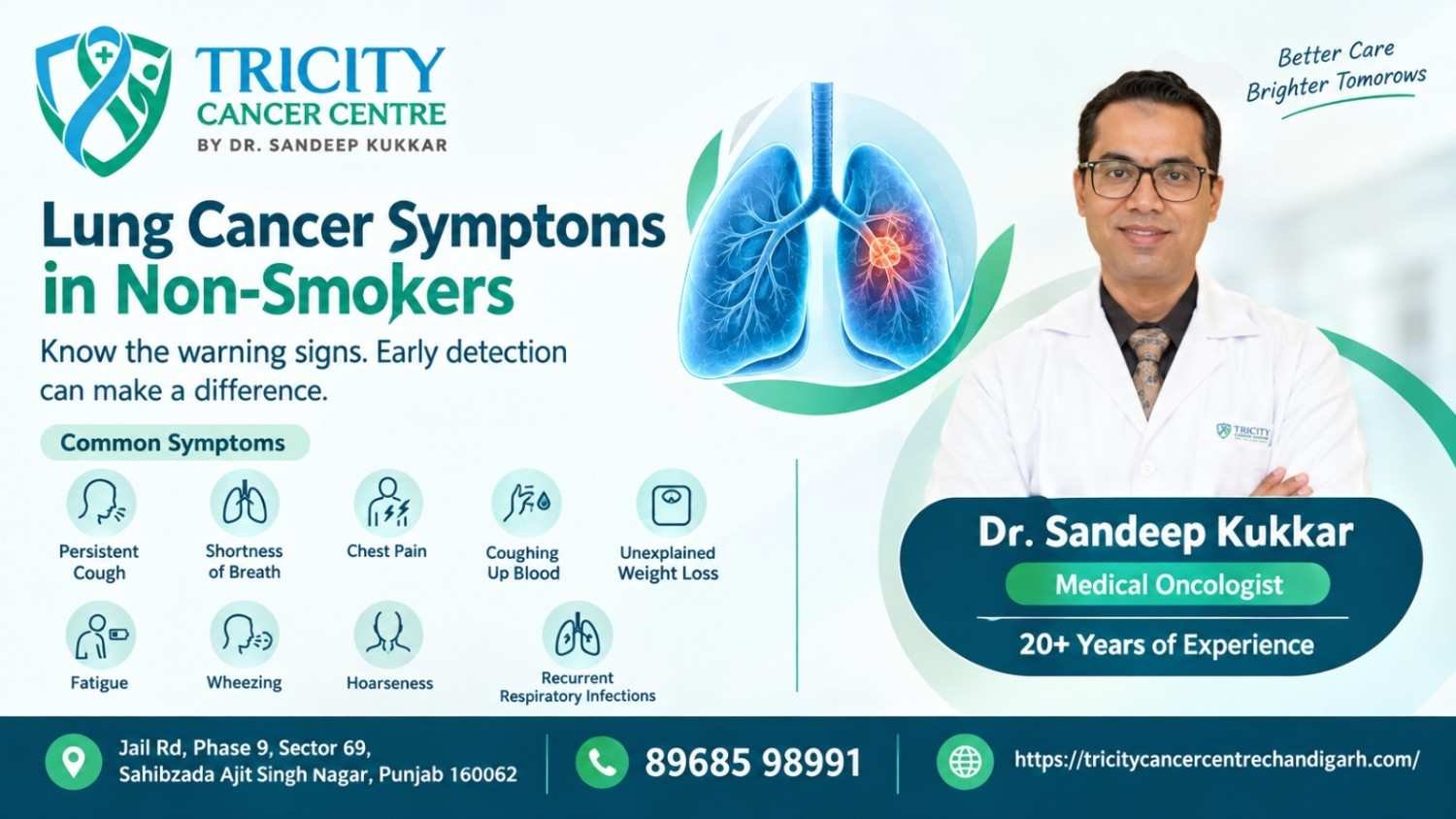
Lung cancer is commonly associated with smoking, but smoking is not the only factor linked to this disease. People who have never smoked can also develop lung cancer due to factors such as secondhand smoke, air pollution, radon, certain workplace exposures, family history, and genetic changes. In the United States, the CDC estimates that approximately 10% to 20% of lung cancers occur in people who have never smoked or smoked fewer than 100 cigarettes during their lifetime.
Understanding the lung cancer symptoms in non-smokers is therefore important. Recognizing persistent or unusual symptoms can encourage timely medical evaluation and help identify the underlying cause.
Can Non-Smokers Develop Lung Cancer?
Yes, lung cancer can occur in people who have never smoked. Cigarette smoking remains the major risk factor, but non-smokers can also face other factors that increase their risk.
Secondhand smoke, air pollution, radon, asbestos, diesel exhaust, and certain workplace exposures can increase lung cancer risk. A personal or family history of lung cancer and certain genetic changes may also play a role.
However, having one or more risk factors does not mean that a person will develop cancer. Likewise, people without obvious risk factors can still develop the disease.
What Are the Key Lung Cancer Symptoms in Non-Smokers?
The symptoms of lung cancer can be similar in smokers and non-smokers. Some people may not experience noticeable symptoms during the early stages, while others may develop respiratory or general health changes.
1. Persistent or Worsening Cough
A cough that does not go away or gradually becomes worse can be an important symptom to investigate. Many conditions, including respiratory infections, asthma, allergies, and acid reflux, can cause a persistent cough. However, if the cough continues despite appropriate treatment or changes over time, medical evaluation may be appropriate.
2. Shortness of Breath
Unexplained or persistent shortness of breath can occur when lung function is affected. It may become noticeable during everyday activities, exercise, or even at rest in more serious cases.
Breathlessness has many possible causes, so it should not automatically be considered a sign of cancer. A healthcare professional can determine whether further investigation is necessary.
3. Chest Pain or Discomfort
Chest discomfort or pain can occur with several health conditions. In some cases, lung cancer may cause chest pain, particularly when a tumor affects structures around the lungs.
Persistent or unexplained chest pain should be discussed with a healthcare professional, especially when it occurs along with coughing, breathing difficulties, or other unusual symptoms.
4. Coughing Up Blood
Coughing up blood, also known as hemoptysis, should not be ignored. Although it can have causes other than cancer, including infections and other respiratory conditions, it requires medical assessment to determine why it is happening.
Even a small amount of blood in the sputum should be discussed with a doctor rather than assumed to be harmless.
5. Unexplained Weight Loss
Unexpected weight loss without changes to diet or exercise can sometimes indicate an underlying health problem. It is listed among the possible symptoms of lung cancer, although it can also occur with many other medical conditions.
If unexplained weight loss continues or occurs together with respiratory symptoms, medical evaluation can help identify the cause.
6. Persistent Fatigue
Feeling unusually tired for an extended period can be another warning sign. Fatigue is a common symptom of many conditions, including infections, anemia, sleep disorders, and other illnesses.
When persistent fatigue occurs alongside symptoms such as cough, breathlessness, unexplained weight loss, or chest discomfort, it is worth discussing with a healthcare professional.
7. Wheezing or Hoarseness
New or persistent wheezing may indicate changes affecting the airways. Hoarseness can also occur in people with lung cancer, although it is much more commonly caused by other conditions such as infections, allergies, acid reflux, or voice strain.
If either symptom persists without an obvious explanation, an appropriate medical assessment can help determine its cause.
8. Repeated Respiratory Infections
Repeated episodes of pneumonia or other respiratory infections may sometimes be associated with an underlying lung problem. The CDC lists repeated bouts of pneumonia among changes that can occur with lung cancer.
If infections repeatedly return or do not resolve as expected, further investigation may be recommended depending on the person’s symptoms and medical history.
Why Can Lung Cancer Be Missed in Non-Smokers?
One possible reason for delayed evaluation is the belief that lung cancer only affects people who smoke. A persistent cough or breathing problem may instead be attributed to allergies, pollution, asthma, infection, or other common conditions.
Another factor is that lung cancer may not cause noticeable symptoms in its early stages. The CDC notes that many people do not develop symptoms until lung cancer has become more advanced.
This does not mean that every cough or episode of breathlessness indicates cancer. Most such symptoms can have other causes. The important step is to seek appropriate medical advice when symptoms are persistent, worsening, unexplained, or accompanied by other concerning changes.
When Should You See a Doctor?
You should consider medical evaluation if you experience:
- A cough that does not go away or becomes worse
- Coughing up blood
- Persistent or unexplained chest pain
- Shortness of breath
- New or persistent wheezing
- Unexplained weight loss
- Ongoing fatigue
- Persistent hoarseness
- Repeated episodes of pneumonia or respiratory infection
Severe breathing difficulty or significant coughing up of blood requires prompt medical attention.
If you are concerned about symptoms, an oncologist or other appropriate healthcare professional can assess your medical history and determine whether further investigations are needed.
How Is Lung Cancer Diagnosed?
Symptoms alone cannot confirm lung cancer. Doctors may begin with a medical history and physical examination and then recommend appropriate investigations based on the symptoms and risk factors.
Imaging tests such as a chest X-ray or CT scan may be used to examine the lungs. If an abnormal area is identified and cancer is suspected, a biopsy may be performed to confirm the diagnosis. Additional tests may then be used to determine the type and stage of the cancer.
Staging is important because treatment decisions depend on factors such as the cancer type, stage, tumor characteristics, molecular changes, and the person’s overall health.
What Are the Treatment Options for Lung Cancer?
Lung cancer treatment is individualized. Depending on the type and stage of the disease, treatment may involve surgery, chemotherapy, radiation therapy, targeted therapy, immunotherapy, or a combination of approaches.
For people diagnosed with lung cancer, an oncology consultation can help explain the diagnosis, available treatment approaches, additional testing that may be required, and the goals of treatment.
Patients seeking specialized cancer care in the region can consult Dr. Sandeep Kukkar at Tricity Cancer Centre Chandigarh for appropriate evaluation and guidance based on their individual diagnosis.
Can Non-Smokers Reduce Their Risk of Lung Cancer?
Not all lung cancer risk factors can be avoided, particularly genetic or family-related factors. However, reducing exposure to avoidable risks may help lower overall risk.
People can avoid tobacco smoke and secondhand smoke, follow appropriate workplace safety measures when working with potentially harmful substances, and limit exposure to known occupational carcinogens. Where appropriate, people can also test for radon exposure and take steps to reduce it.
People who have never smoked generally do not need routine lung cancer screening simply because they are concerned about developing the disease. Screening recommendations depend on factors such as age and smoking history. People with specific risk factors should discuss their individual situation with a healthcare professional.
When Should You Consider Specialist Cancer Care?
If investigations suggest a possible lung tumor, specialist evaluation becomes important. A cancer specialist can review imaging, pathology, and other test results to understand the diagnosis and determine which treatment options may be appropriate.
Those looking for a Cancer Treatment Hospital in Mohali can consider a centre where oncology evaluation, diagnosis, and treatment planning can be coordinated according to the patient’s needs.
Similarly, people searching for a Best Oncologist in Chandigarh should focus on finding an appropriately qualified cancer specialist whose expertise and treatment approach match their particular diagnosis.
Conclusion
Being a non-smoker does not completely eliminate the risk of lung cancer. Lung cancer symptoms in non-smokers may include a persistent or worsening cough, shortness of breath, chest pain, coughing up blood, unexplained weight loss, fatigue, wheezing, hoarseness, and recurrent respiratory infections.
These symptoms do not necessarily indicate cancer. Many other medical conditions can cause similar symptoms. However, you should not ignore symptoms that persist or have no clear explanation.
Early medical evaluation can help identify the underlying cause and, when necessary, guide further investigations and treatment. If you notice ongoing respiratory or general health changes, consult a healthcare professional instead of trying to diagnose the condition yourself.
Frequently Asked Questions
1. Can lung cancer occur in someone who has never smoked?
Yes. People who have never smoked can develop lung cancer. Secondhand smoke, air pollution, radon, asbestos, occupational exposures, family history, and certain genetic changes can contribute to risk.
2. What are the common lung cancer symptoms in non-smokers?
Possible symptoms include a persistent cough, shortness of breath, chest pain, wheezing, coughing up blood, unexplained weight loss, fatigue, and recurrent respiratory infections. These symptoms can also occur with other conditions, so medical evaluation is needed to determine the cause.
3. Does having a cough mean I have lung cancer?
No. A cough is very common and can result from infections, allergies, asthma, acid reflux, and many other conditions. However, a cough that does not improve or becomes progressively worse should be evaluated by a healthcare professional.
4. How is lung cancer confirmed?
Doctors may use imaging tests such as chest X-rays or CT scans to investigate an abnormality. When cancer is suspected, a biopsy is generally used to confirm the diagnosis. Additional tests may be performed to identify the cancer type and determine its stage.
5. Is lung cancer screening recommended for people who never smoked?
Routine lung cancer screening is generally not recommended for people who have never smoked. Screening eligibility depends on individual risk factors, particularly age and smoking history. People with specific concerns should discuss their risk with a healthcare professional.
